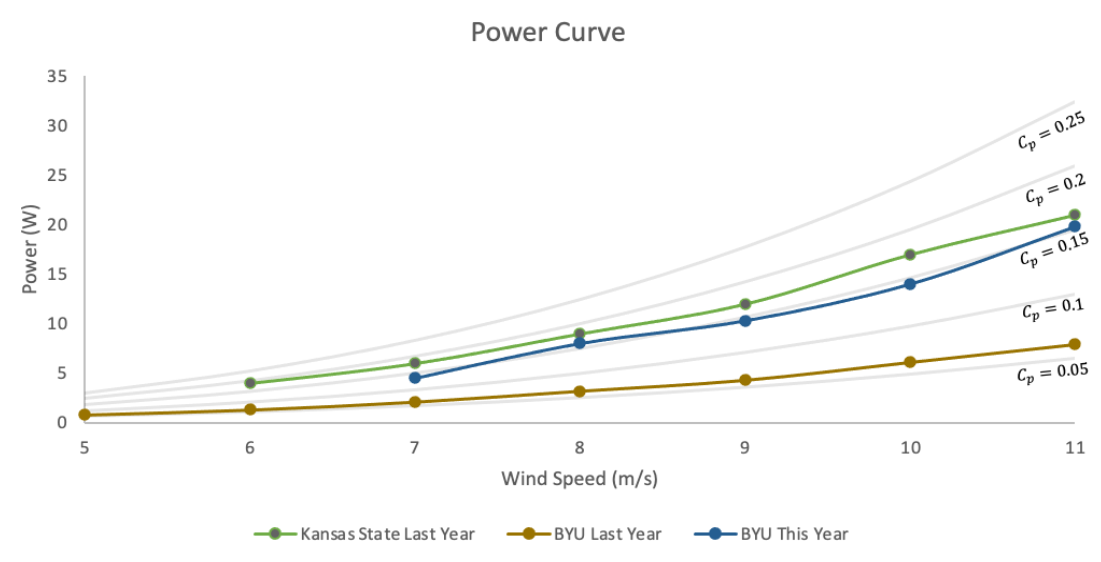
Turbine Power Curve
In testing our turbine control system paired with an improved blade design was able to significantly increase power output compared to the previous year's iteration.
Brigham Young University
Provo, UT
August 2022 - June 2023
Arduino, Controls, Circuit Design,
Teamwork
This project focused on designing and implementing a wind turbine control system for Brigham Young University’s entry in the Department of Energy’s Collegiate Wind Competition. I worked with a team of 13, specifically working in a subteam of four to develop a control system and dynamic load relay that enabled precise power management under variable conditions. The control system achieved power regulation by adjusting blade pitch, executing emergency stops, and managing load connectivity.
The control system incorporated an encoder to measure RPM and a voltage divider to provide real-time feedback to an Arduino microcontroller.
Our system utilized a resistor array for dynamic load control, optimizing power output at wind speeds from 5-11 m/s. For stability in higher-speed conditions
(11-14 m/s), we implemented a variable pitch system controlled via a linear actuator connected to the Arduino, ensuring steady power generation across a
broad wind range.
The turbine control system and power circuit had to follow strict competition guidelines, including safety and reliability requirements. As part of these requirements
The control system needed to be able to adjust the pitch of the turbine blades, slow the turbine to 10% of its maximum speed under emergency stop conditions,
and detect if the turbine was disconnected from the power load. Our turbine control components also had to be optically isolated from the controller, which was located outside the turbine.
I worked with the controls subteam to ensure that our system fully met all the competition requirements.
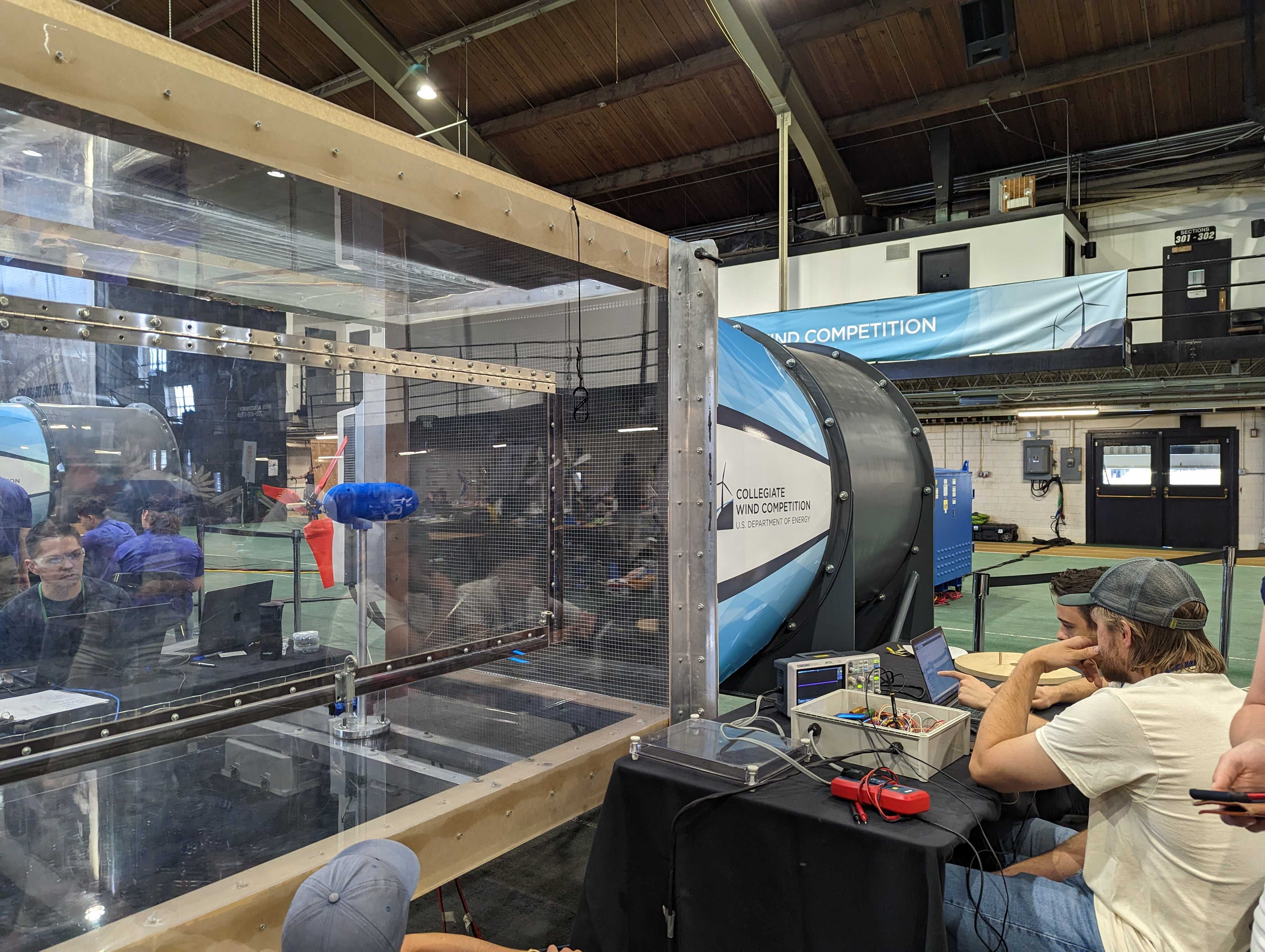
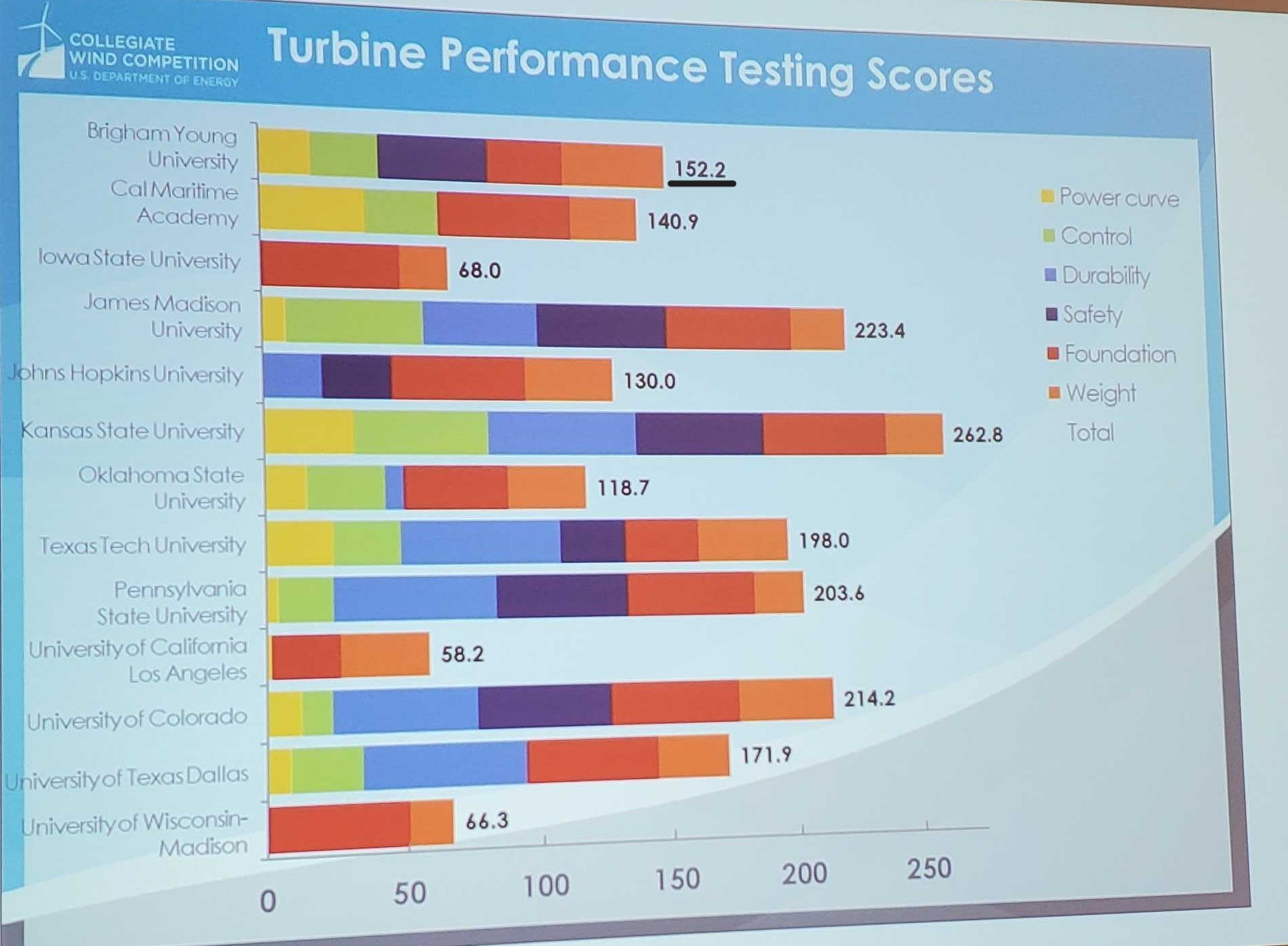
The developed control system met all test objectives, including dynamic power regulation and emergency response. However, during official testing, a mechanical failure caused the generator to decouple from the turbine shaft, resulting in a complete power loss for the remainder of the event. Despite this setback, our team placed 7th out of 13 competitors, an improvement from previous years. This iteration introduced a new control system that laid a foundation for future teams to build upon, marking significant progress toward a competitive turbine design.
In testing our turbine control system paired with an improved blade design was able to significantly increase power output compared to the previous year's iteration.
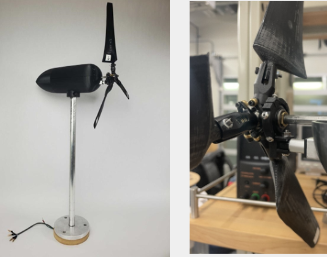
Our mock turbine featured a variable pitch system, controlled by a linear actuator.
We were given two opportunities to test our turbine at the competition, which took place in Boulder, Colorado.
Our team placed 7th out of 13 competitors. My work on the controls subteam directly contributed to our scores in the power curve, control, and safety categories.
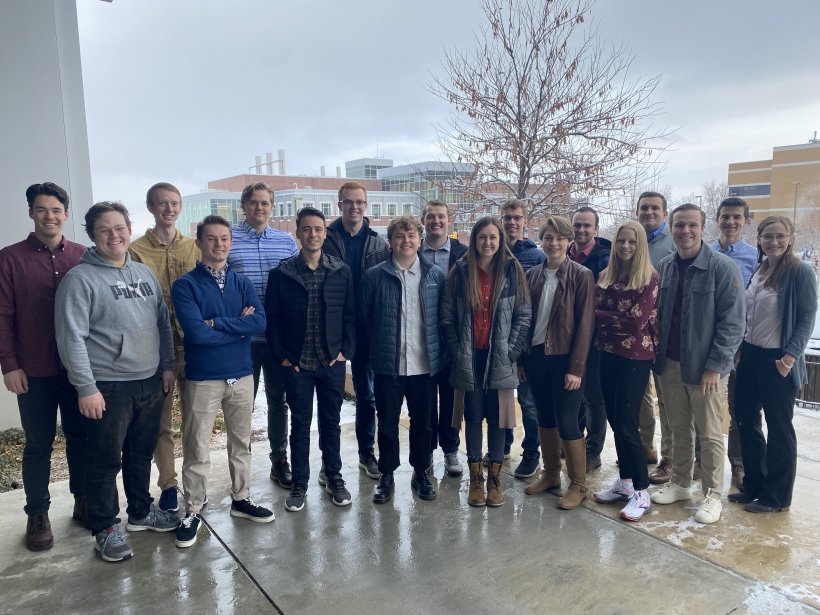
Our team consisted of 13 students from a mix of Mechanical, Electrical, and Computer Engineering. The controls subteam was made up of three Mechanical Engineering and one Computer Engineering students.